

“`html
The Death of Pope Francis: A Hotbed for Global Cyber Scams
Following the shocking passing of Pope Francis, a surge of cyber scams has erupted worldwide, with hackers preying on mourners. They exploit the sorrowful moment to unleash a barrage of malicious attacks via fake images crafted by artificial intelligence designed to hijack personal and banking data.
These vile operatives have repurposed tactics previously seen after the death of Queen Elizabeth II, lurking like shadows every time a great tragedy captivates public interest, just as with past disasters like the Dana de Valencia incident or the Los Angeles fires. This is nothing more than a digital underworld at work!
“Curiosity and emotional impact make these moments ideal opportunities for attackers. Whenever there is a great event, we detect a strong increase in the scams designed to exploit the public interest,”
warns Rafael López, a security engineer from Check Point Software and an affiliate of the National Cybersecurity Institute (INCIBE).
False images of Pope Francis created with AI that disseminate hackers in a wave of cyber thefts
Check Point, a leading authority in cybersecurity, highlights how these cunning hackers craft fake images that are intertwined within false news stories, circulating virally through social media platforms like Instagram, TikTok, and Facebook, or crawling through Google searches.
“The hackers circulated an image of the deceased Pope before even the burning chapel was installed,”
reports López, denouncing the fabrication of other misleading images depicting the Pope struggling for breath before his demise.

False image of the sick Pope, created by AI, who disseminated fraud
These nefarious publications contain deceitful links or buttons encouraging users to “read more” or “see the complete video.” In reality, they lead to a malware installation that can swipe the credit card data stored on your device. This is serious!
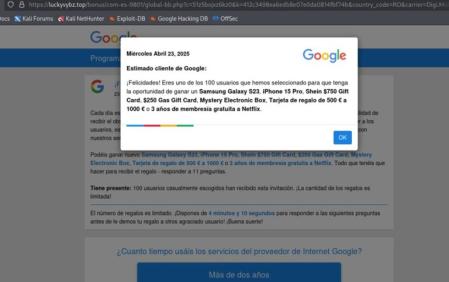
Often, López reveals, pop-up windows emerge, luring victims with bogus giveaways or promotions, tricking users into registering with their personal information. This is a recipe for financial disaster. One of the most alarming tactics includes fake pages mimicking Google, demanding login credentials, which opens the floodgates for hackers to access valuable personal accounts.
Cybethaf
Despite these opportunistic cyber attacks, there remains a way to protect yourself. López emphasizes the importance of prevention. “The key is to use common sense,” he advises, recommending that individuals seek information only from reputable sources, verify the legitimacy of news outlets, and avoid clicking on dubious links. Keeping browsers and operating systems updated, as well as utilizing antivirus software, are crucial steps in this digital battlefield.
“`