
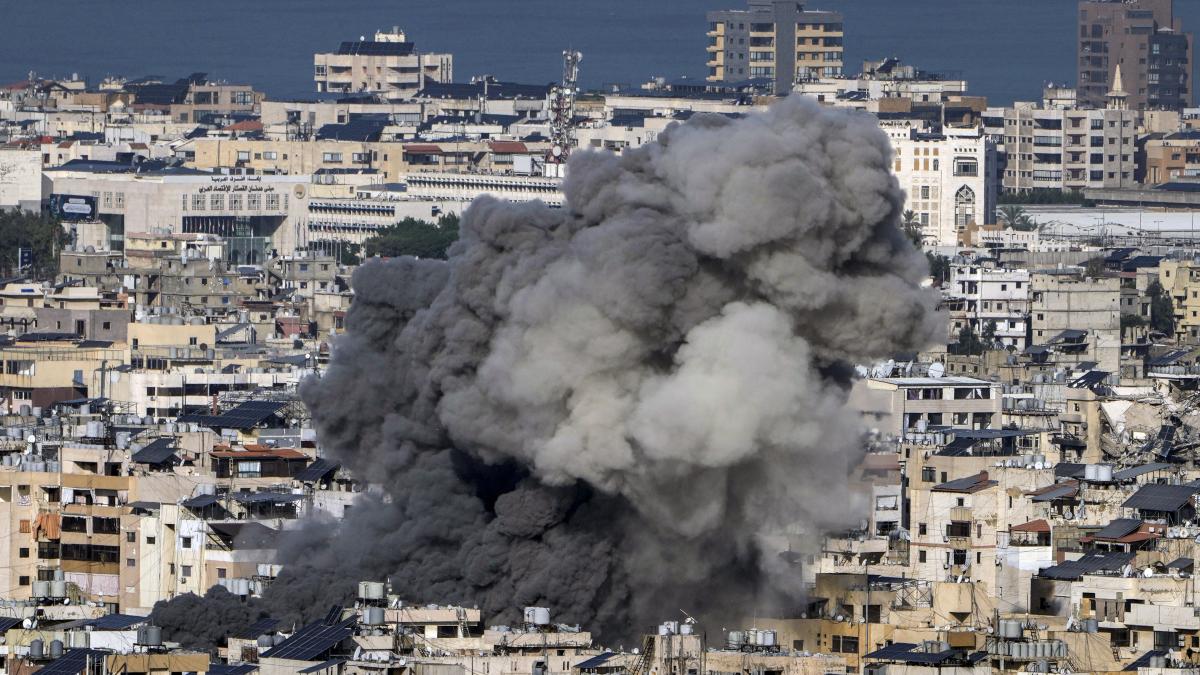
Israeli warplanes have intensified their bombardments on the southern suburbs of Beirut, specifically targeting the area known as Dahiyeh—an established stronghold of the Shiite militant group Hezbollah.
On Saturday, a series of airstrikes struck Hezbollah’s infrastructure facilities in Dahiyeh, coordinated by military intelligence. The statement from the Israeli Army underscored the strategic military objective behind these assaults.
In a grim prelude to these attacks, Army spokesman Avichay Adraee made urgent evacuation calls for the scant civilian population still residing in the targeted neighborhoods. His statement on X, the social media platform, read: “To all residents in the southern suburbs, particularly those within the designated buildings outlined in the attached maps, evacuate immediately. Ensure to maintain a safe distance of at least 500 meters from these premises for your safety and that of your family.”
Evidence of the increased military activity was profound on Friday, with the Israeli Army executing as many as four waves of attacks on Dahiyeh alone, alongside ongoing bombing operations in southern and eastern Lebanon.
Israel justifies its aggressive military strategy by alleging that Hezbollah has systematically integrated its armed operations within the Lebanese civilian fabric, thus elevating the risk to civilian life during military engagements.
In a demonstration of escalating tensions, over twenty projectiles and four drones were launched from Lebanon targeting northern Israel, according to Israeli military reports. The drones were intercepted successfully, and most rockets fell short, causing no reported casualties.
The Underlying Causes of Military Escalation
This week marked a significant escalation in Israeli airstrikes targeting the southern suburbs of Beirut. Amid ongoing diplomatic maneuvers aimed at establishing a ceasefire, Israel appears to be exerting military pressure in response to a lack of actionable military targets.
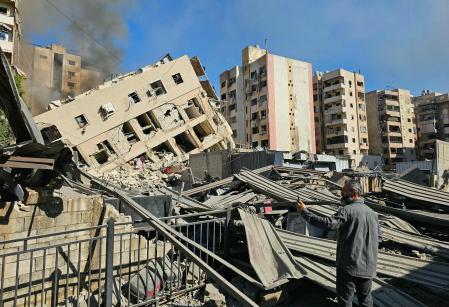
Outside of Dahiyeh, attacks were reported in areas previously considered not within the scope of Israel’s military actions, such as Joun and Abadieh located in the Mount Lebanon province. This developing strategy indicates a potential shift in Israeli military focus amid the renewed hostilities initiated on September 23.
Historically, Israeli forces conducted bombing runs on the Dahiyeh suburb primarily at night. Recently, however, the Israeli military expanded this tactic to include daytime raids, raising the risk to civilians.
Geopolitical Implications of Escalating Violence
Hezbollah’s considerable military capabilities, a byproduct of decades of conflict with Israel, equip them to not only defend against Israeli attacks but also to retaliate effectively. Israeli military operations have intentionally sought to dismantle Hezbollah’s operational infrastructure—actions that replicate strategies employed in previous conflicts where civilian areas were collateral damage to achieve military objectives.
In recent exchanges, Israeli airstrikes have also extended to Syria, targeting locations associated with Hezbollah’s logistics and supply routes to deter weapon transfers from Iran. This emphasizes the multifaceted nature of the conflict as tensions escalate across both Lebanese and Syrian borders, which could have wider implications for the region.
Continued Calls for Ceasefire
The proliferation of hostilities is occurring amidst diplomatic undertakings aimed at achieving a ceasefire. Nabih Berri, speaker of the Lebanese Parliament and an ally of Hezbollah, acknowledged receiving a US proposal in a recent interview, emphasizing a directed dialogue amid the violence.
Still, progress remains tentative. Berri indicated that further negotiations are required to understand the United States’ proposed settlement, which seeks to establish a committee comprised of several Western nations to oversee the implementation of UN Security Council resolutions that ended prior conflicts, including the 2006 war.
Potential for Larger Scale Conflict
As Hezbollah’s leadership remains a significant target and with many southern Lebanese towns ravaged, the likelihood of Israel moving into a second phase of the conflict—characterized by more extensive military action—has increased. Such actions could involve intensified bombing campaigns aimed at strategically essential cities like Tyre and Baalbek.
The ramifications of this potential escalation are significant for the civilian populace of Lebanon, as fears grow surrounding the targeting of crucial infrastructure such as airports and major highways.
Although military solutions are predominately in play, the necessity for negotiations becomes more pronounced as hopes for a sustainable resolution diminish amid the ongoing turmoil.