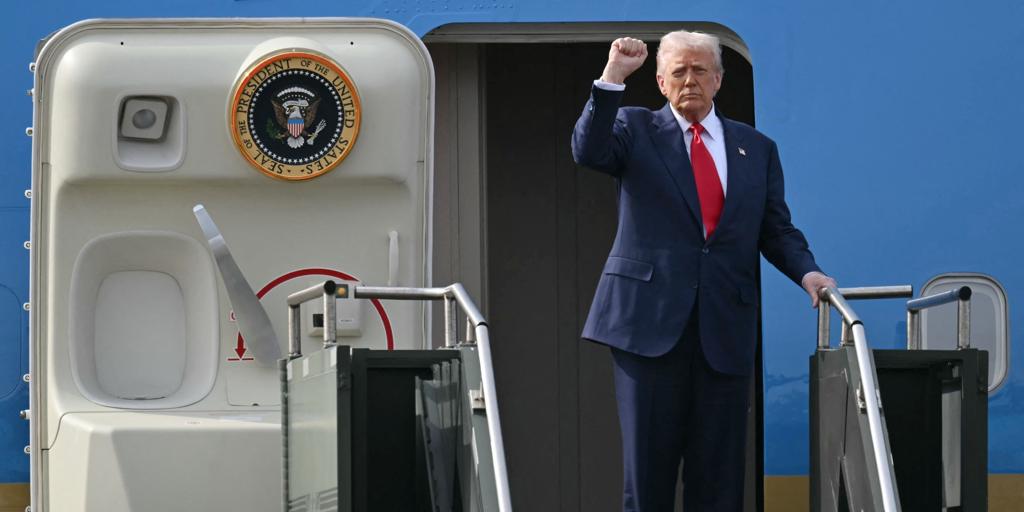

Donald Trump’s appointments for his second term have fallen like May water on Beniamin Netanyahu’s Government and on a large part of Israeli society. The exultation is palpable, since in all positions that touch the historic military and diplomatic alliance, the president-elect has chosen fervent defenders of Israel and hardliners against Iran.
“Dream team,” former Minister of Justice and Interior Ayelet Shaked celebrated on the social network X. His slogan accompanied the photos of the next US Secretaries of Defense and State, Pete Hegseth and Marco Rubio; of the future advisor to the National Security Council, Michael Waltz, and of the appointed ambassadors to the UN and in Israel, Elise Stefanik and Mike Huckabee.
Netanyahu dreams of annexing the West Bank during Trump’s second presidency
Hegseth, Rubio and Waltz, who will participate in military and foreign policy decision-making, have been critical of the Biden Administration’s “pressure” for a ceasefire in Gaza or, at least, for a greater influx of aid than alleviate the humanitarian catastrophe that Israel is causing on the Palestinians. “Let Israel finish the job and get rid of Hamas quickly,” Waltz wrote in The Economist on November 2, echoing Trump’s own words.
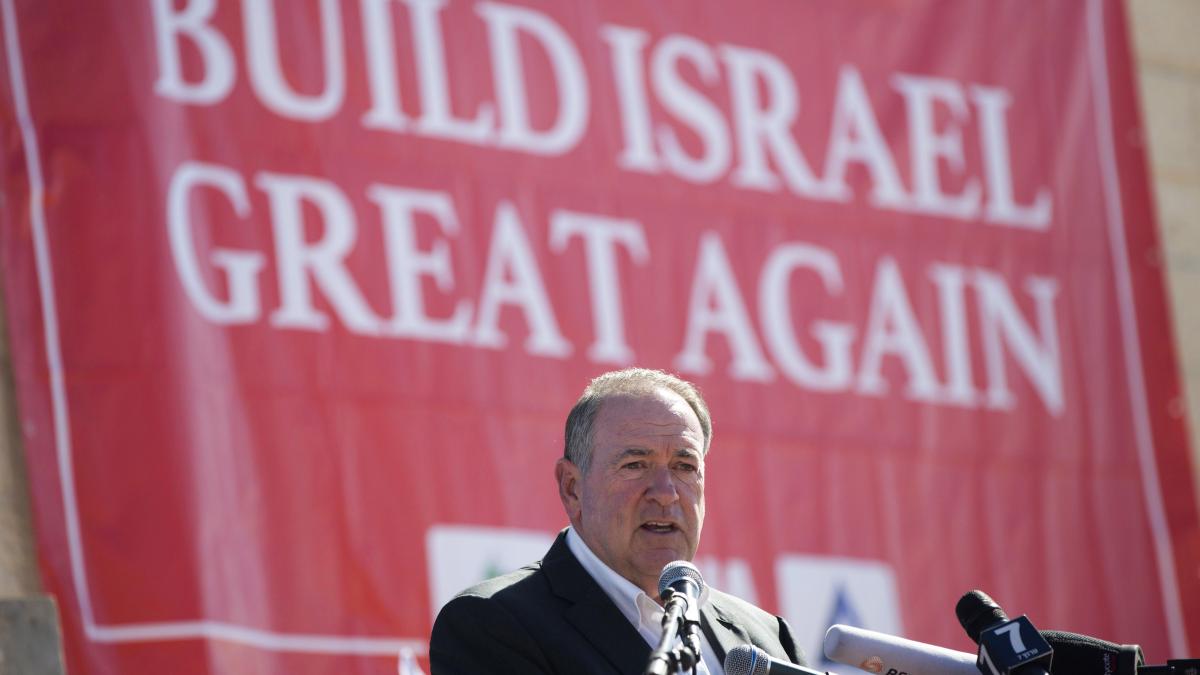
On the diplomatic level, Stefanik and Huckabee are two spearheads in the staunch defense of Israel. The first, soon to be sent to the UN, asks for “unconditional aid” to Israel and has led in the House of Representatives the complaints against three university presidents for the alleged anti-Semitic nature of the protests on their campuses. And the second, former governor of Arkansas, is a frequent visitor to the Jewish State and, contrary to international law, denies the occupation in the Palestinian territories and considers the settlements in the West Bank “cities and neighborhoods.” These profiles, added to the memory of the favorable policies towards Israel adopted by Trump in his first term, fuel this enthusiasm, especially in the most radical and ultra-nationalist political sectors. The ultimate desire is the formal annexation of the occupied West Bank in 2025, as Bezalel Smotrich, finance minister and settler in charge of civil affairs in the West Bank, expressed on Monday.
“It is certainly possible,” Huckabee, an evangelical Christian who is on track to be the first non-Jewish US ambassador to Israel since 2008, told Army Radio this Wednesday. “I will not design the policies,” he clarified. But [Trump] “He has already demonstrated with his first term that there has never been an American president who has been more useful in ensuring Israel’s sovereignty.”
Lara Friedman, president of the Foundation for Middle East Peace (FMEP), told the magazine +972 that “we are facing a period of Greater Israel policies” and, noting the positions expressed by Trump’s advisors, “they have already spoken of Israel’s right to gain territory taken in self-defense.” “I believe that framework will be applied in Gaza, as the annexation of the West Bank is on the table and also of parts of Lebanon,” he warns.
Former Trump officials have claimed The Times of Israel that support for the annexation of the West Bank would not occur “in a vacuum,” but as “part of a peace plan.” Other analysts have pointed out that Trump is also interested in expanding his ties with Arab countries such as Saudi Arabia, which would make it difficult to explicitly support the annexationist agenda of Netanyahu and his ministers.
This does not prevent settler leaders from having confidence in expanding settlements and building infrastructure to expand their control over the West Bank, as occurred in Trump’s first presidency and as has accelerated Netanyahu’s return at the end of 2022.
As the organization Peace Now explains, this architecture of housing, roads, industrial zones and illegal outposts has spread in the shadow of the wars in Gaza and Lebanon, constituting a de facto annexation of the occupied West Bank.
In this scenario, the Palestinians expect a resurgence of violence already unleashed, despite the fact that many do not consider that there are major differences between Biden and Trump. Tariq Kenney-Shawa, a Palestinian-American analyst, says the two “share similar visions for the Middle East, with the preservation of Israel’s dominance being a key priority.”
However, Trump’s promise to soon end the wars in Gaza and Lebanon and his stance of prioritizing US interests maintain some expectations. For Hanna Alshaikh, coordinator of the Palestine Project at the Arab Center in Washington, there are two scenarios: that Trump promotes agreements “that favor Israel and at the same time reduce bloodshed in Gaza and Lebanon,” or that he “gives carte blanche to Israel for annexation, ethnic cleansing and the undermining of Palestinian institutions like UNRWA.”