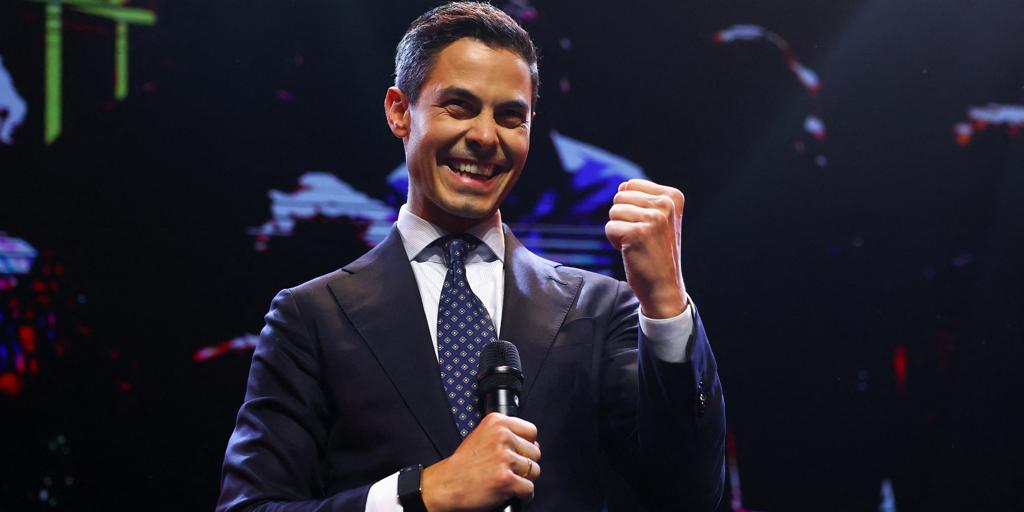


In a riveting prelude to the runoff elections on November 24th, all pollsters indicate a narrow lead for Yamandú Orsi from the left-wing coalition, the Frente Amplio. This reflects a fascinating dynamic as he faces stiff competition from Álvaro Delgado, the National Party candidate and the architect behind the recent administration’s policies.
“I want to be president of all Uruguayans,” Orsi declared emphatically during Sunday’s presidential debate where he framed himself as “the sure change,” a campaign slogan that resonates deeply amidst societal discontent.
Conversely, Delgado, who played a pivotal role as the secretary of the previous presidency, attempted to capture the hearts of the electorate with a metaphorical depiction: “I am prepared, tested, and humbly ready to be that ship captain who can navigate stormy waters.” Yet, as the winds of political fortune shift, one must ask if these words are enough to sway an increasingly skeptical electorate.
Entering the final week, Orsi enjoys a measurable advantage of between two and four points over his opponent, signifying a critical moment not just for the candidates, but for the political landscape of Uruguay. If he secures victory in the second round, it would mark a resurgence for the Broad Front, a coalition that ruled twice under the leadership of former presidents Tabaré Vázquez and José Mujica.
The stakes are elevated, as the Broad Front’s potential return would signal a dramatic shift in governance within a country widely recognized for its political and economic stability. The current political architecture has been largely shaped by the National Party, under which the 2019 presidential election saw the rise of Luis Lacalle Pou. His administration’s recent policies have faced challenges, including a complex social security reform that has captured public attention and divided opinions.
The Uruguayan Constitution permits re-election only after an intermediate period, disqualifying the current president Lacalle Pou from pursuing a consecutive term. Although Delgado is deemed as the rightful successor, he lacks the compelling charisma of his predecessor, which raises questions about the effectiveness of his campaign.
Critics argue that both candidates failed to inspire confidence during the debate, with a lack of emotional nuance leading to widespread disappointment across social media. The candidates’ uninspiring exchanges echo a broader narrative of stagnation within political dialogue.