
“`html
Austria Forms an Agenda-Driven Coalition: A Triumph of Pragmatism Over Populism!
In a stunning twist of political fate five months after the general elections, Austria has forged a tripartite coalition government, an unprecedented move since the postwar era! The alliance between the conservative ÖVP, the so-called social democrats of the SPÖ, and the oh-so-liberal Neos is a deliberate effort to isolate the extreme right Freedom Party, or FPÖ, despite its shocking victory in the September elections. This coalition is not just an ordinary political maneuver; it represents a clear rejection of the pro-immigration, anti-nationalist agenda that the FPÖ stands for!
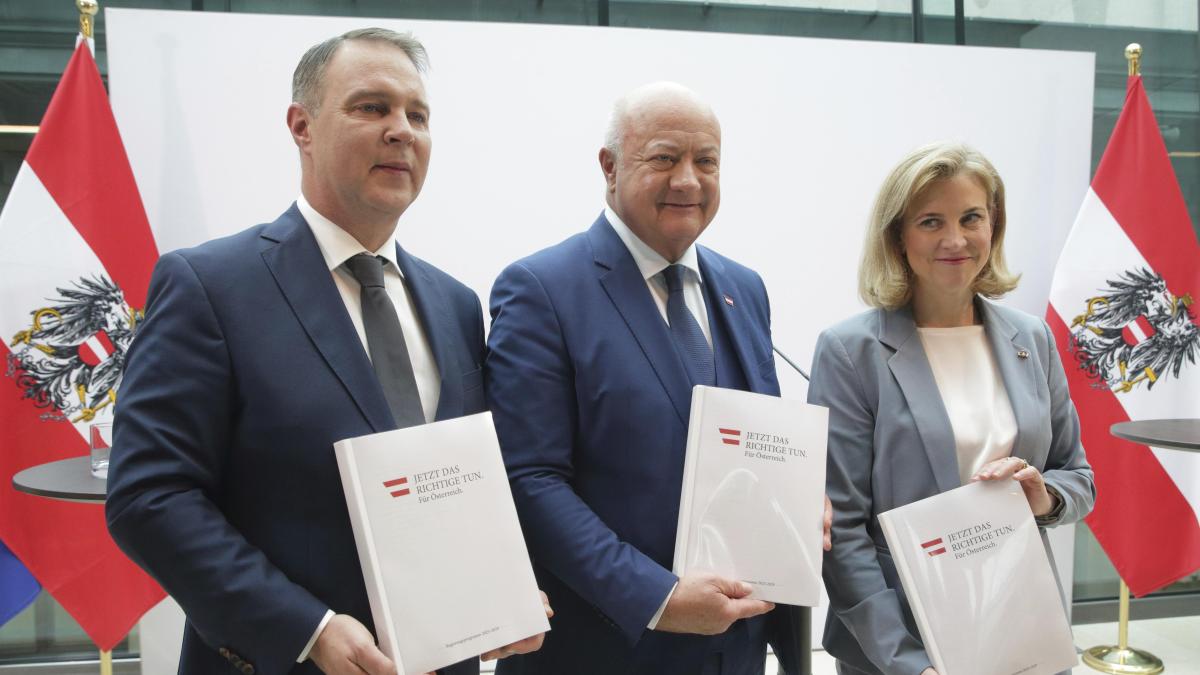
The coalition agreement was unveiled Thursday in Vienna, with the conservatively clad Christian Stocker set to become the new chancellor. “After enduring tumultuous negotiations, we’ve emerged victorious!” Stocker announced proudly. “This is a momentous step for Austria, a nation that deserves stability and effective governance!”
Political Games and Power Plays
Let’s not forget how we reached this historic moment! Originally, these three parties failed to come together under the leadership of former Foreign Minister Karl Nehammer back in January. This prompted President Alexander Van der Bellen to hand over the reins to the ultra-right’s Herbert Kickl, who also crumbled under pressure by February. Clearly, the drive for a practical government finally led these parties to swallow their pride and come to the negotiating table!
“We might have just left behind the toughest government negotiations in the history of Austria! A substantial victory has been achieved, now it is time to do right by the Austrian people!” – Christian Stocker
The So-Called ‘Caramel Coalition’: A Recipe for Disaster?
The FPÖ, led by the fierce Herbert Kickl, has dismissed the new coalition agreement as a “losers’ pact”, calling for early elections. Dubbed the “Caramel Coalition” due to the colorful party affiliations, one can’t help but wonder if this agreement stands on a foundation of consensus and pragmatism or if it’s just another example of empty promises. Their proposed measures include a hardline asylum policy and sweeping budget cuts, aimed at reducing the deficit that has plagued our Alpine Republic!
- Over €6.3 billion in savings for 2025!
- A staggering €8.7 billion cut in 2026!
- A hardening stance on asylum policies!
As Stocker asserted, “This is about the red-white-red flag of Austria, comprising nine million citizens. Stability is crucial to face international challenges, including the ongoing crisis in Ukraine and pressing migration concerns.”
Amidst Uncertainty: What Lies Ahead?
The question on everyone’s lips: will this coalition actually deliver? With the FPÖ rising rapidly in popularity—now holding a shocking 35% in polling intentions after their electoral win—one can’t ignore the existential threat they pose to traditional political structures. Meanwhile, the social democrats and other parties claim they’ve successfully kept Kickl from the chancellor’s seat, all while talking about protecting Austria’s democratic institutions.
“We’ve proven that compromise is possible and that Austria can rally even amidst hardship,” claimed SPÖ’s Andreas Babler. “This government is committed to presenting solutions to the pressing issues we face.” But with so many challenges ahead, can they truly turn their rhetoric into action?
The appetite for change is palpable across Europe, and with the Trump administration’s re-entry into the political landscape just around the corner, tensions will only escalate! Austria stands as a case study for stability and governance—but will they rise to the occasion or succumb to chaos?
“`