
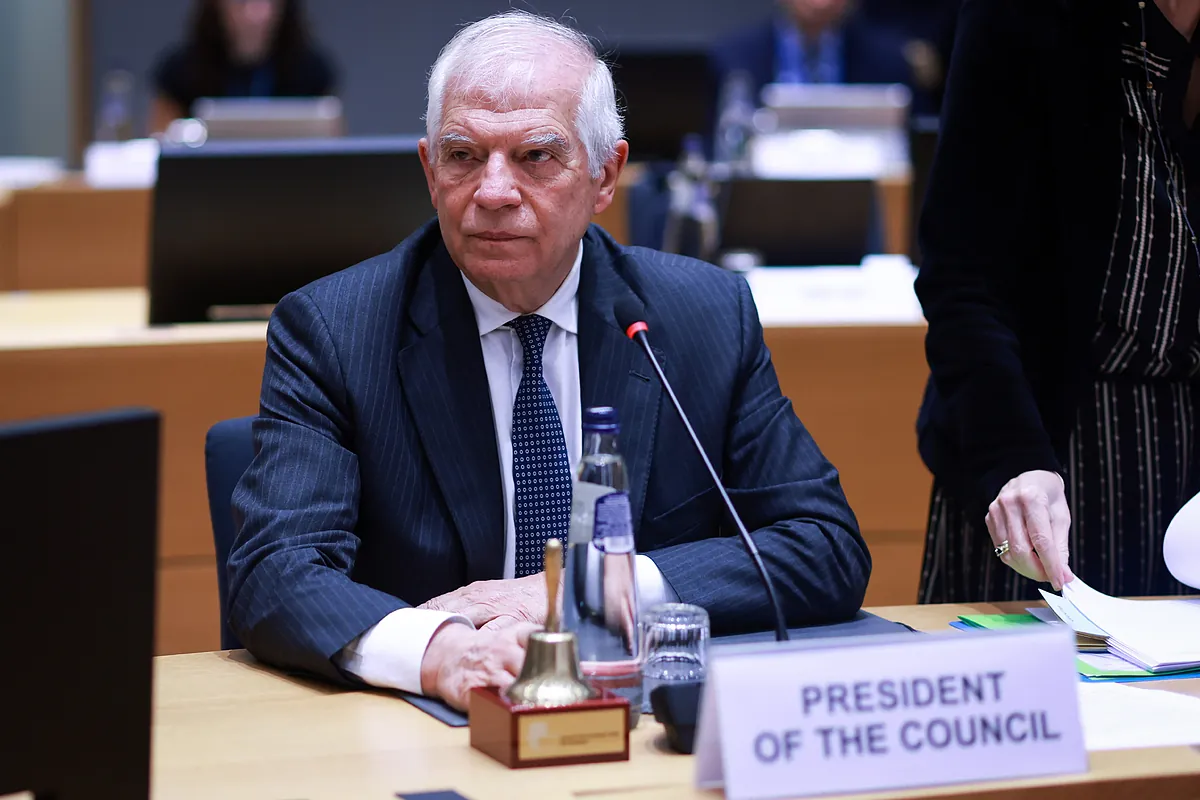
As Josep Borrell bids farewell to his role as the High Representative of the European Union for Foreign Affairs, his final remarks have sent shockwaves across the diplomatic landscape. “The war in Gaza is against children,” he stated, reiterating his pointed accusations against Israel during what is believed to be his last Foreign Affairs Council meeting.
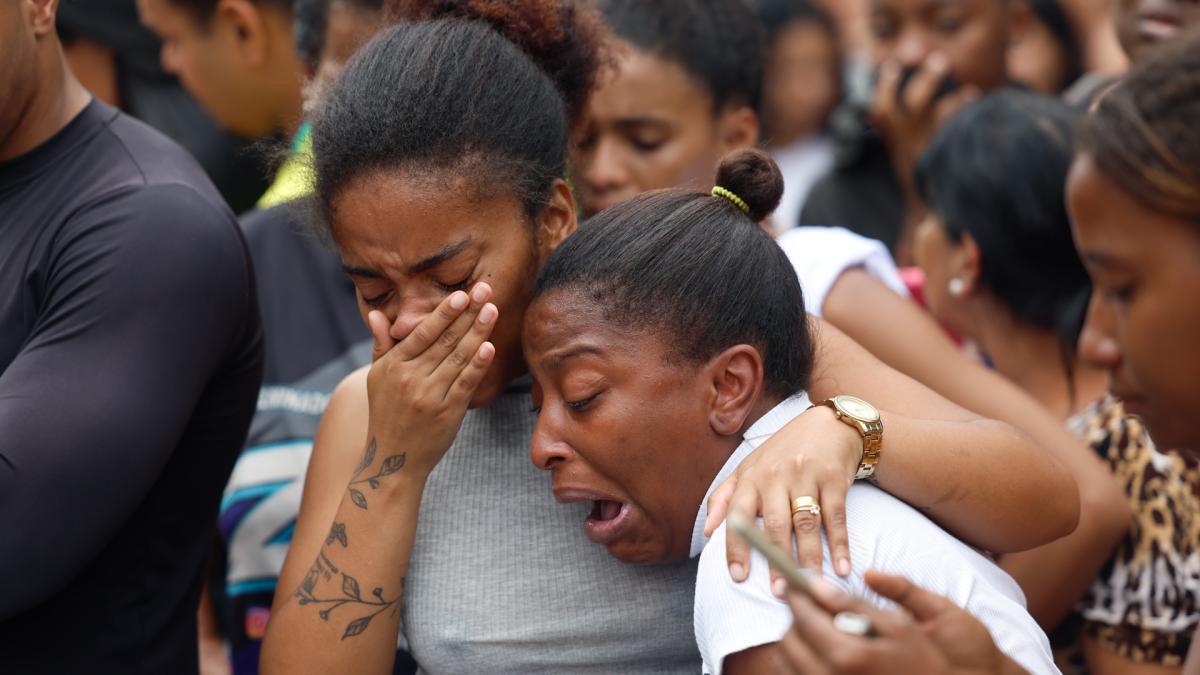
Borrell emphasized alarming statistics, claiming, “70% of those killed in Gaza are women and children under nine years of age.” This powerful assertion not only underscores the humanitarian crisis in Gaza but also poses serious questions about the proportionality of Israel’s military actions. Following his critique, Borrell urged member states to consider suspending political dialogue with Israel, a proposal he anticipated would garner significant support. However, it was swiftly dismissed as a mere gesture. “Member states believe it is much better to continue diplomatic ties with Israel,” he concluded, painting a grim picture of the EU’s stance.
The Indefatigable Critique of Israel
Borrell’s remarks echo a persistent discontent with Israel’s tactics over recent months. In prior statements, he accused Prime Minister Benjamin Netanyahu of inciting international conflict and obstructing humanitarian aid. Notably, Borrell recounted Israel’s limitations on the admission of aid during a humanitarian crisis, declaring, “Netanyahu’s claims of having the most moral army in the world are patently false,” thereby challenging the popular narrative that frames Israel’s military actions as justified within wartime ethics.
His pointed critiques signal a departure from the diplomatic norms expected of a High Representative, aligning closely with a humanitarian perspective rather than traditional political caution. In times marked by an increasing polarization around the Israeli-Palestinian conflict, Borrell’s comments have reignited debates on the ethics of military interventions in densely populated civilian areas.
Ukraine, Geopolitics, and Broader Implications
Shifting focus from Gaza to Ukraine, Borrell articulated frustrations towards the West, specifically targeting the limitations imposed on Ukraine’s military capabilities by U.S. policymakers. “Ukraine should be able to use the weapons provided not only to stop the arrows but also to hit archers,” he quipped during the meeting, pointing out the insufficient nature of U.S. support in defeating a foe like Russia.
Borrell emphasized the protracted conflict in Ukraine, now stretching beyond 1,000 days, arguing that miscalculations by Vladimir Putin had resulted in a war that exceeded his initial expectations. “Putin thought he would be in Kyiv in two weeks and is still fighting in Donbas,” he claimed. As Ukraine aims for EU membership, Borrell’s comments also reflect broader concerns over the EU’s resolve to support candidate nations in conflict.
The implications of Borrell’s statements extend beyond Europe and the Middle East, tapping into a global discourse concerning military intervention, international law, and humanitarian norms. Borrell warned against a military conflict that escalates into a global crisis, pointing fingers at countries like Iran, North Korea, and China for their roles in augmenting Russia’s military efforts.
His assertion, “Without Iran, China, and North Korea, Russia could not continue the war,” highlights the interconnectedness of conflicts in today’s geopolitical landscape, where local skirmishes carry the potential for global ramifications.
A Call for Humanitarian Awareness
Through personal experiences shared amidst the discourse, Borrell’s impassioned advocacy for humanitarian considerations reflects a leadership style increasingly at odds with traditional diplomatic hesitance. His tenure, although under a shadow due to the global challenges he faced, serves as a beacon for an alternative approach to diplomacy—one that seeks to balance statecraft with a robust humanitarian agenda.
In his closing days of tenure, Borrell’s unfiltered critiques may well resonate within corridors of power, pushing European leaders to reassess their stance on Israel and Palestine. As the humanitarian crisis deepens, and the violence unfolds, the urgency for effective intervention grows stronger.
His legacy, marked by fervent advocacy for children’s rights in conflict zones and transparent critique of military ethics, invites both admiration and backlash. However, one thing is clear: Borrell’s departure from the EU will leave behind a complex legacy, steeped in issues that transcend local conflicts and hint at an interconnected geopolitical dance.
As public pressure mounts for accountability and humanitarian responses in the Gaza conflict, the broader implications for European foreign policy are poised for evolution. Will his bold stance usher in a new era of EU diplomacy where humanitarian values are prioritized as fiercely as national interests? Time will reveal the impact of his final remarks, echoing in the hearts of those who seek peace and justice in turbulent times.
In conclusion, Josep Borrell’s tenure as EU’s chief diplomat encapsulates the strife and complexities of modern geopolitical discourse, urging a re-evaluation of not only how the EU engages with external partners but also how it prioritizes humanitarian issues in foreign affairs.