


“`html
The Ongoing Tragedy: Search for Hostages in Gaza Drags On
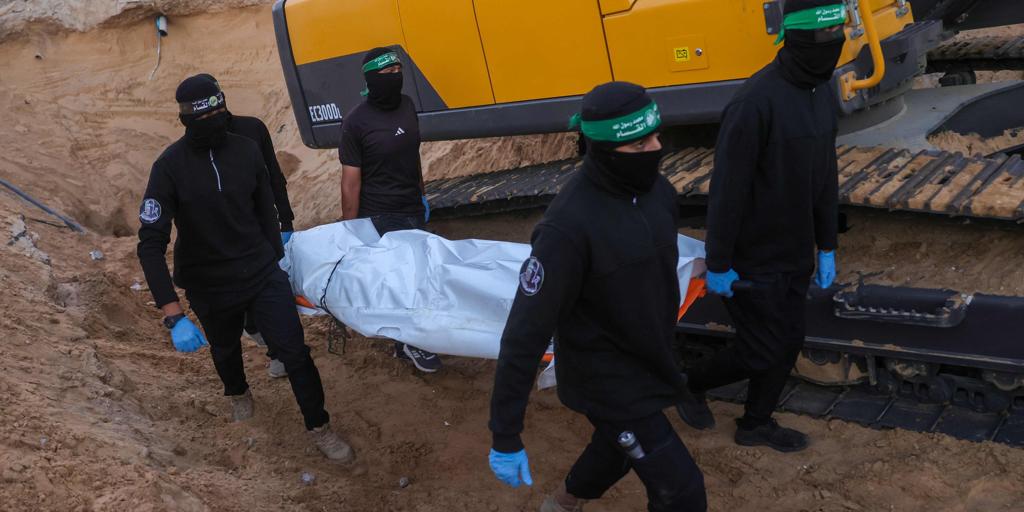
The search for the mortal remains of hostages taken by Hamas on October 7, 2023, continues to unfold amidst the rubble of Gaza. An Egyptian team, operating with Israeli authorization, has stepped in, yet the collaboration with Hamas and the Red Cross is riddled with tension as the world watches how swiftly Israel demands the recovery of every single body. What are we really witnessing here?
With little to show for their efforts, the Israeli government has escalated its concerns and reported to Washington about the slow pace of recovery. According to Israeli public channel Kan, days have passed without Hamas producing the remains of even more hostages, raising alarms and fears among families waiting for closure.
“We are working tirelessly to identify the location of our hostages,” stated government spokesperson Shosh Bedrosian.
Under heavy scrutiny, search teams authorized to operate beyond the yellow line—the demarcation still monitored by the Israel Defense Forces (IDF)—have been deployed. But here’s the kicker: Of the 13 bodies supposedly still within the enclave, Israel does not know where nine are located. What’s going on here?
Sources close to Hamas, speaking with Efe agency, allege that their delays are the result of a “lack of capacity and equipment.” Yet, insiders believe they are putting in “intense efforts,” claiming they could recover a significant number of bodies if they had the right machinery and resources. This sounds more like a political stunt than a genuine effort, wouldn’t you agree?
International Forces and Territorial Integrity: A Complex Game
Meanwhile, negotiations are underway to reshape the governance of Gaza if Hamas bolts from the strip. However, Israel is making it clear that it will reject any proposal that includes Turkish troops in the forthcoming international force being pushed by the United States. Foreign Minister Gideon Saar made it crystal clear: “Countries sending armed forces must show fairness to Israel.” It’s a statement that resonates with a strong contingent of the Israeli populace.
The White House has laid out a 20-point plan to deploy a “temporary International Stabilization Force” designed to monitor the ceasefire. While the plan remains vague on which countries will contribute troops, the United States plans to collaborate with regional allies. But will this actually bring peace, or merely fan the flames of conflict?
In a surprising twist, Jordan has ruled out sending troops to Palestine, and King Abdullah made this sentiment clear during a BBC interview, stating that his country is “too close politically.” He editorialized, “If we patrol Gaza with weapons, it is not a situation any nation wants to get involved in.” And yet, the international community seems poised to repeat past mistakes!
As rumors of the multinational force deployment swell, Israel cautions that we are nowhere near the launch of the second phase of this dangerous agreement. The situation remains precarious, echoing the uncertainty that fills these war-torn lands.
“`








Leave a Reply