

“`html
Germany’s Bold Move in Space: Isar Aerospace’s Rocket Launch Defies Expectations!
The first launch of the German carrier rocket Spectrum has ignited a firestorm of debate and excitement! Despite a premature crash just 30 seconds after takeoff, the radical new company Isar Aerospace is declaring victory. But what does this mean for Germany’s place in the space race? Let’s dive into the details!
“What success! At 1.30 CEST (10.30 GMT), the Spectrum’s launch vehicle of Isar Aerospace took off successfully from the Andøya cosmodrome in Norway,”
exclaimed the company in a statement. After just 30 seconds, the ambitious rocket met its fate—plunging into the sea. And yet, they claim this is a win! Is this just another example of European bravado in the face of reality?
Critical Data or Just an Epic Fail?
Daniel Metzler, the general and co-founder of Isar Aerospace, touted, “Our first test flight fulfilled all our expectations,” flaunting a “clean takeoff” despite the unsightly crash. The company believes they’ve gathered valuable data for future missions. But can we trust a company that celebrates a crash like it’s a triumph?
- Launch successfully completed at 1:30 CEST
- Rocket crash after 30 seconds of flight
- Isar Aerospace touts valuable data for future missions
The firm insists that thanks to their strict safety procedures, no one was harmed. But with rockets falling from the sky, is that really the bar we should be setting?
A Groundbreaking Dream or a Pipe Dream?
Robert Habeck, Germany’s Economy and Climate Minister, hailed the launch as an “Important Day for German and European Space Flights”, emphasizing the necessity of access to space. He stated, “Access without obstacles to space is strategically crucial.” But what does that mean for the average German citizen? A 30-second flight embarking on economic sovereignty or just a considerable expense?
“Space is one of the most critical platforms for our safety, resilience, and technological advancement,”
Metzler warned. It’s hard not to wonder if this launch will lead us toward independence in a world dominated by electric vehicles and satellites!
What Lies Ahead for Isar Aerospace?
With their next rockets, Spectrum #2 and #3, already in production, Isar Aerospace is gearing for future launches. The company aims to establish itself as a contender against American giants like SpaceX. But will they be able to maintain this momentum? Or are they setting themselves up for another devastating failure?
The Spectrum, measuring 28 meters and equipped with a robust design for carrying small and medium satellites, represents a bold statement in the global space race. Yet, with their first flight crashing to the sea, will they be remembered as pioneers or a cautionary tale for overreach?
This audacious attempt at launching a privately funded rocket begs further scrutiny:
- Can Germany truly compete in the space frontier?
- Will future flights deliver results, or will they fall short like the first?
- What does this mean for European technological independence?
As events unfold, one thing remains clear: Isar Aerospace has kicked off a new chapter in Europe’s ambitions to conquer the cosmos—let’s hope they ensure success for the future!
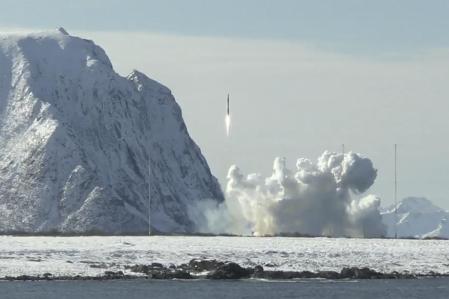
Moment in which the rocket has taken off.
“`