

“`html
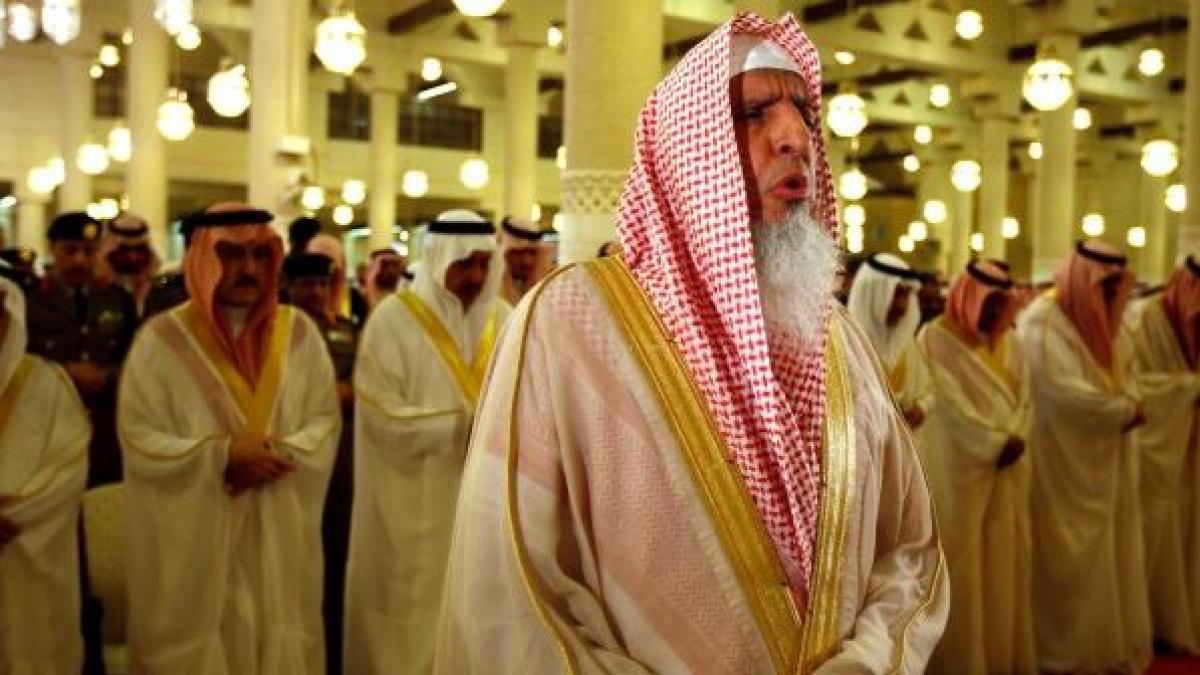
The world is reeling today as we report the shocking death of Sheikh Abdulaziz Bin Abdullah al-Sheikh, the Great Mufti of Saudi Arabia—the man who held the highest religious authority in the kingdom for a staggering 25 years. While the nation succumbed to a wave of so-called “social liberalization,” this devout leader remained a bastion of traditional values until his passing at the age of over 80.
Legacy of an Iron-Willed Leader
The Great Mufti was a figurehead in the ultra-conservative Sunni Islamic world. As the torchbearer of Wahhabism, he commanded respect and authority, especially as the guardian of Islam’s holy sites in Mecca and Medina. His voice resonated when millions gathered for the mandatory pilgrimage of Hajj, making his declarations a matter of utmost importance. Yet, amidst the fluctuations of modernity, he remained unwavering in his condemnation of extremist groups like ISIS and Al-Qaeda.
A Mixed Record of Change
Despite his closeness to the royal family—who have shunned traditionalism to embrace a new era allowing women to drive and visit cinemas—Sheikh Abdulaziz was not to be trifled with. The audacity of his critiques aimed at extremists was matched only by the strict interpretation of his own teachings.
“Mobile phone cameras are a tool of vice in our society,”
he famously declared in 2004, illustrating his disdain for modernity creeping into traditional spheres.
Controversial Views and Shifting Sands
Blind from an early age, Sheikh Abdulaziz grew to hold substantial power in his role, appointed as the Grand Mufti in 1999. His conservative stance saw him endorse the Saudi enforcement of gender segregation and the very controversial ideas such as permitting marriages of 10-year-old girls. Yet, with the ascendance of King Salman and his son, Prince Mohammed, there were noticeable shifts in his hardline positions. Even on critical issues like gender mixing, which he labeled as a “catastrophe,” silence became his new rhetoric.
Social Discord Amid a Changing Landscape
In 2018, women were granted the right to drive—a move that Sheikh Abdulaziz was eventually forced to support. With the restrictions of the virtue commission waning, the nation witnessed a cultural opening. The pandemic saw him warning of sins for ignoring social distancing, reflecting the dichotomy between his once-unyielding stance and today’s wavering moral compass.
The Once Indomitable Mufti’s Era Declines
Now, following the Great Mufti’s death, many wonder if his legacy will stand strong against the tide of a rapidly changing Saudi Arabia. Sheikh Abdulaziz’s influence was undeniable, yet included within the fabric of his teachings was also a tension with the new age of leadership driven by Prince Mohammed Bin Salman and his vision for a modern Islamic society. As we look forward, one must ask if the old guard of religious authority can coexist with contemporary Saudi ambitions.
The death of Sheikh Abdulaziz Bin Abdullah al-Sheikh marks not just the end of an era but highlights the conflict of values that will continue to shape the future of Saudi Arabia and its place within the Islamic world.
“`






Leave a Reply