
“`html
Norway’s Train System: A Digital Revolution Undermining Traditional Values
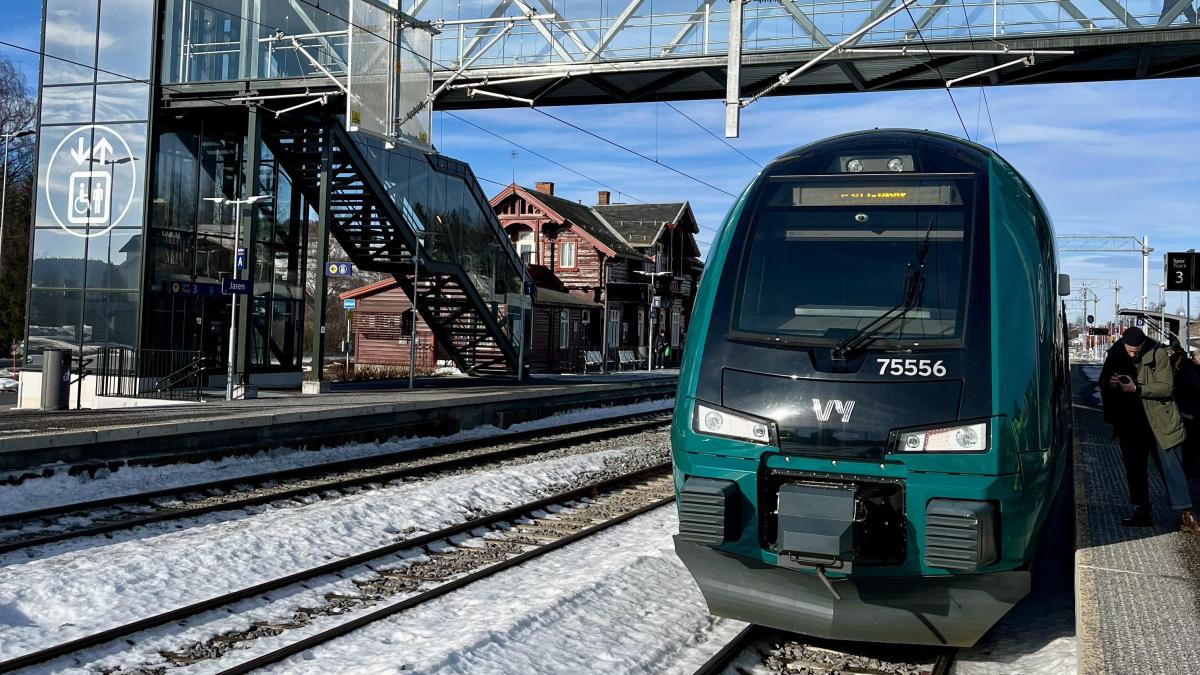
The heart of Norway’s railways is undergoing a seismic shift that threatens the livelihood of its time-honored traditions. In Jaren, a mere 70 kilometers north of Oslo, a railway employee worked steadfastly for over thirty years, embodying a dedication that can no longer compete with the relentless push of **digitalization**. After completing his routine check, he would leave his beloved wooden desk—an *icon of the past*—and step into the frosty embrace of change. *But now*? The train doors close automatically, leaving behind the human touch, an eerie sign of a dystopian future!
The Norwegian railway has *jumped headfirst* into the digital era, abandoning the quaintness of the past. The once-stalwart manual signaling system, a proud relic since 1950, has been *replaced* by a sleek, modern control center developed by Siemens Mobility, coordinated by Norway’s Bane Nor. The **railway of the future** is born, but at what cost to the soul of the railways?
The Decline of Old School Train Signaling at Jaren
A Bold Future at a Heavy Price
Controlled from a high-tech facility in Oslo, the ambitions are staggering—over 4,169 kilometers of railways and 375 stations will be interconnected, all **streamlined** under a single digital signal. Their motto: “One country, one connection.” But hold onto your wallets! This ambitious project is projected to cost a jaw-dropping 32 billion euros by 2029—money that could be better spent on supporting local businesses instead of succumbing to this *onslaught of automation*!
Despite all odds, the transformation is underway, especially at the Jaren station and along the GJOVIK line. The old ways have vanished, replaced by *advanced* European signal technology that boasts of superior reliability. Soaring CEO praises from Siemens Mobility celebrate Norway as the beacon of modern infrastructure in Europe, but who truly benefits from this upheaval?
“Norway is now the nation with the most modern infrastructure in Europe,” boasts Agustín Escobar.
Beacons and Virtual Communication: Replacing the Human Element
In a bid to further strip away human involvement, the new distances are managed through *IP communication*, backed by around 400 beacons scattered across a 67-kilometer stretch. How has our society fallen to the point where a machine dictates every aspect of our transport? VY machinist Stein Meader claims the new system offers safety, but at what cost?
“The uncertainty of farms and level crossings makes it safer with the new system,” he states, despite a diminishing trust in such technology.
The Human Toll of Progress
This overhaul has cut the number of traffic controllers down to half from 373 in 2020 and is aiming for a mere 35 by 2030. Fired? No! They’re simply pushing them into new, ‘profitable’ roles. Is it a staggering success or a heartless abandonment of our traditions?
Improvements in Security Come at a Human Cost
For travelers, the new system claims to bring increased safety and punctuality, eliminating the old, sluggish methods that were responsible for 40% of delays. But is **safety really the issue**? As technology takes over, is the human spirit—*the heart that drives our railways*—being overlooked? “Safety, punctuality, and capacity are improved significantly with the new system,” affirms Sverre Kjenne, but at the expense of what? The old days of genuine human connection and service?
“`