
“`html
The Dire Situation in Beirut: A Fearful Descent into Chaos
Even the most timid Beirutians have grown accustomed to the haunting sounds of bombs echoing through their once vibrant city. For three grueling months, the distant crunch of explosives has shattered the illusion of normalcy. But today, there’s an unsettling air. “This is not normal: it is as if Israel is saying goodbye to us. Until the next war,” laments Nour, a worried citizen.
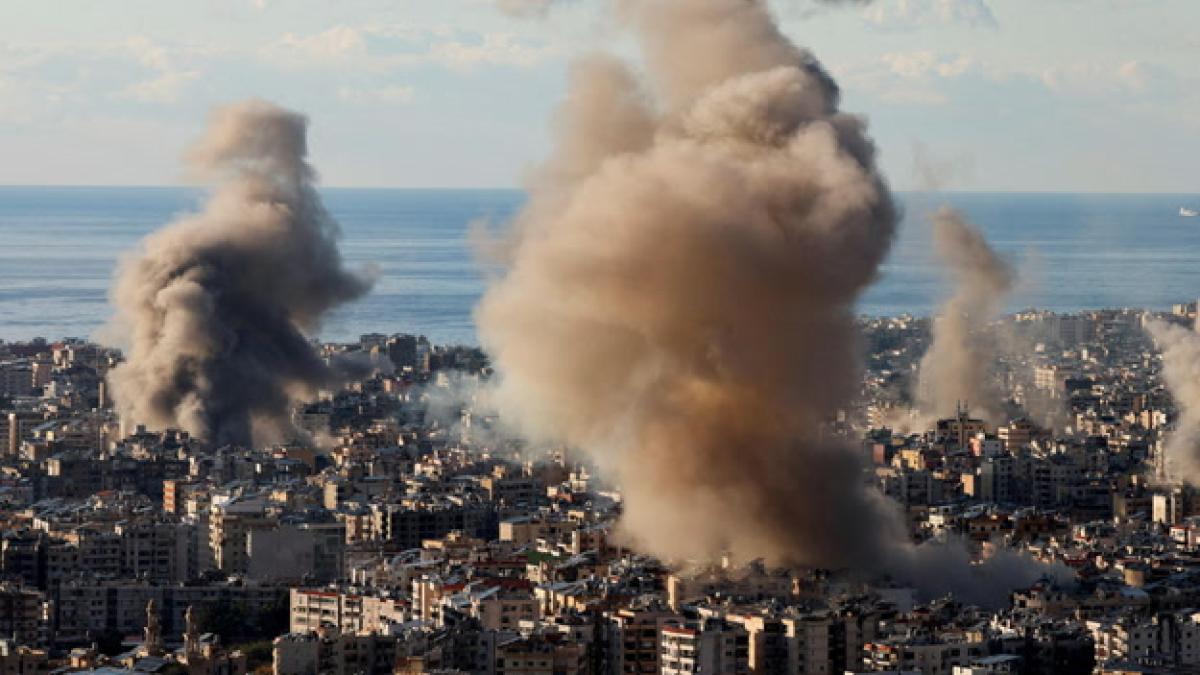
From her balcony, she watches as a disturbing dance of smoke fills the skyline, a sight too familiar in these troubled times. Israeli fighter jets relentlessly unleash their firepower, leaving the people of Beirut wondering about the true nature of peace as the television blares Netanyahu’s grim announcement of an “imminent ceasefire” with Hizbullah. “I don’t know how to feel… I just know this night is going to be very hard,” the young Lebanese woman confesses, echoing the concerns of many.
The Paradox of Peace Amidst Destruction
In a twist of irony, this peace announcement came just after the most punishing wave of bombings that Beirut has seen. Israeli army spokesperson Avichay Adraee declared, like a weatherman forecasting doom, the widespread attacks to come against Hizbullah targets across the city. “Brace yourselves,” he warned, as if it were a daily update.
Destruction in the Tayouneh neighborhood, on the outskirts of Beirut, yesterday
Just moments later, the sound of at least ten projectiles ripping through the air shattered the calm of southern Beirut, striking the Shiite militia stronghold. With evacuation orders sent out for 20 locations, including central neighborhoods, fear gripped the city further. An impact rocked downtown, obliterating an entire block and resulting in casualties that left the community reeling.
The Ugliest of Conflicts
Over a year of turmoil. The latest Israeli-Lebanese war ignited on October 8, right after Hamas’s brazen attack on the Gaza border, as Hizbullah launched projectiles at Israeli positions. The casualties are shocking: as of yesterday, nearly 3,800 Lebanese lives lost and over 15,000 injured. In stark contrast, Israel confirms only 62 soldiers and 41 civilians dead. 226 medical personnel have perished under Israel’s relentless bombing campaign.
More than a million displaced. The UN reports a staggering 1.3 million Lebanese have been forced to evacuate, most still within Lebanon and hundreds of thousands seeking refuge in Syria. Meanwhile, around 96,000 Israelis abandon their homes, crammed into hotels across their cities, as fear drives them from their shelters.
Until the bombs began to drop, life continued in the beleaguered city, with many residents stoically refusing to leave despite the chaos outside. Yet, as the Israeli airstrikes loomed, panic escalated. The new focal point for destruction appeared to be the branches of Al Qard al Hasan, the financial network tied to Hizbullah.
“Don’t leave the building. Stay away from the windows or head to the basement,” said an apartment block manager via a frantic community WhatsApp message. As Netanyahu, in a desperate bid to quell dissent, claimed it was crucial to end the conflict, the skies roared with the sound of further attacks.
Is this Really Peace?
Desperation rides high on the streets of Beirut, where questions echo louder than the bombs above. “Has there really been a ceasefire?” questions Mahmoud, a Syrian supermarket owner in central Beirut. “It’s impossible, the Israeli drone that always patrols the street is still here,” he points out, indicating a creeping dread that permeates the atmosphere.
In a city gripped by fear and uncertainty, one can’t help but ponder the reality behind the so-called ceasefire while the powers that be play their dangerous games. As the situation spirals, the people of Lebanon are left wondering: When will the next strike come?
“`